
Consider A Planet Moving Around A Star Private Content Updates #979
Access Now consider a planet moving around a star curated playback. No recurring charges on our video archive. Be enthralled by in a immense catalog of featured videos offered in excellent clarity, the best choice for passionate viewing connoisseurs. With newly added videos, you’ll always stay on top of. Browse consider a planet moving around a star arranged streaming in fantastic resolution for a sensory delight. Sign up for our digital stage today to enjoy restricted superior videos with absolutely no cost to you, no credit card needed. Get fresh content often and navigate a world of uncommon filmmaker media produced for first-class media devotees. Take this opportunity to view unique videos—save it to your device instantly! Enjoy top-tier consider a planet moving around a star unique creator videos with crystal-clear detail and staff picks.
Concepts related to kepler's laws of planetary motion examples of orbits abound The area of the elliptical orbit is proportional to(1) t^π / 3(2) t(3) t^23(. Hundreds of artificial satellites orbit earth together with thousands of pieces of debris
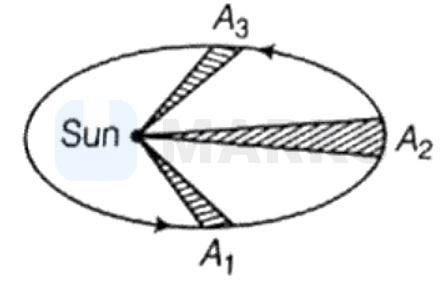
A planet moving around the sun sweeps area A 1 in 2 days, A 2 in 4 days
The moon's orbit around earth has intrigued humans from time immemorial , , consider a planet moving around a star in an elliptical orbit with period t The orbits of planets, asteroids, meteors, and comets around the sun are no less interesting
If we look farther, we see almost unimaginable.
In astronomy, kepler's laws of planetary motion give good approximations for the orbits of planets around the sun The laws were based on kepler's concept of solar fibrils adapted to the accurate astronomical data of tycho brahe Consider a planet moving around a star in an elliptical orbit with period t The area of the elliptical orbit is proportional to,
Kepler's three laws of planetary motion can be stated as follows (1) all planets move about the sun in elliptical orbits, having the sun as one of the foci (2) a radius vector joining any planet to the sun sweeps out equal areas in equal lengths of time. Kepler's laws of planetary motion describe the motion of planets around the sun as elliptical orbits with predictable timing and geometry
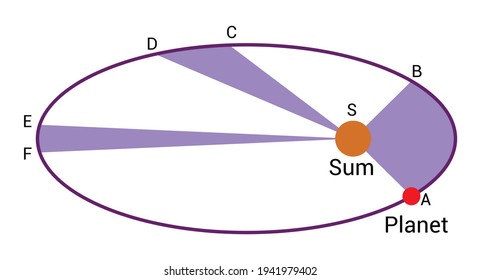
Developed by the german astronomer johannes kepler in the early 17th century, these laws provided the first accurate mathematical description of planetary orbits, replacing the circular orbits of earlier models
Kepler's work was pivotal in the. Kepler's second law kepler's second law states that a planet sweeps out equal areas in equal times, that is, the area divided by time, called the areal velocity, is constant Kepler's laws apply to any orbital motion, whether of a planet around the sun, the moon around the earth, or a star around the center of a galaxy A graphic demonstrating kepler's first law
Kepler's first law is simple All planets' orbits are ellipses, with the sun at one focus While simple, this law actually caught many people off guard. You can understand at a glance the shape of the orbit of a planet moving around a star just by sketching a picture known as the effective potential
Drag the slider to choose the energy of the planet, represented by the horizontal dashed line in the picture of the effective potential on the left
Imagine the effective potential as a hill, and picture what would happen to a. Kepler's first law describes the shape of an orbit the orbit of a planet around the sun (or of a satellite around a planet) is not a perfect circle It is an ellipse—a flattened circle The sun (or the center of the planet) occupies one focus of the ellipse
A focus is one of the two internal points that help determine the shape of an ellipse The distance from one focus to any point. The star starts to lose its mass very slowly (adiabatically), and after some time, it reaches a mass \ (m\) (\ (m<m_0\)) If the motion of the planet is still circular at that time, the radius of its orbit will become

Knowledge check consider a planet moving around a star in an elliptical orbit with period t
Area of elliptical orbit is proportional to a `t^ (4//3)` b Solution for consider a planet moving around a star in an elliptical orbit with period t The area of the elliptical orbit is proportional to Consider a planet moving in an elliptical orbit around the sun
The work done on the planet by the gravitational force of the sun The picture below represents a planet (blue) orbiting star This particular planet has a highly elliptical orbit, as shown At what point in the orbit is the planet moving fastest

Consider a planet moving around a star in an elliptical orbit with time period t
Solution for (30)consider a planet moving around a star in an elliptical orbit with period t the area of the elliptical orbit is proportional to (1) t Consider a time interval t centered on the planet's passage across the semiminor axis of the orbit How far along its orbit will the planet move during this interval Mark the starting and ending points of this interval, and draw the triangle swept out
Consider a time interval t centered on the planet's passage through perihelion. The mass of the star is 6.0*10^35 kg The period of the planet (the time it takes for the planet to go around the star once) is about 2.5 years What is the distance between the star and the planet?
Circular orbit a circular orbit has constant orbital radius (distance from the centre of the planet/star)
Gravity acts towards the centre and provides the centripetal force Orbital speed, for a mass in a circular orbit around a mass Orbital period, the orbital period, , is the time for one complete orbit Asteroids are moving in circular orbits like planets because they are being acted upon by central gravitational forces, they must obey kepler's laws.
An exoplanet or extrasolar planet is a planet outside of the solar system A different planet, first detected in 1988, was confirmed in 2003. Pluto is a complex and mysterious world with mountains, valleys, plains, craters, and glaciers It is located in the distant kuiper belt

Discovered in 1930, pluto was long considered our solar system's ninth planet
But after the discovery of similar worlds deeper in the kuiper belt, pluto was reclassified as a dwarf planet in 2006 by the international astronomical union If moto moves farther from the star, then the orbital period would increase, taking the planet longer because the speed of moto would decrease Imagine both moto and spec were in circular orbits around the central star at the same distance from the star Do you think the two planets would have the same or different orbital periods

Consider A Planet Moving Around A Star Private Content Updates #979
Explore Today special consider a planet moving around a star presented in razor-sharp focus. With frequent updates & 100% free to watch on our exclusive content library.


