Retrogressive Metamorphosis Members-Only Content Refresh #629
Access Now retrogressive metamorphosis world-class viewing. No strings attached on our streaming service. Dive in in a universe of content of shows made available in top-notch resolution, ideal for elite watching connoisseurs. With new releases, you’ll always stay updated. Uncover retrogressive metamorphosis recommended streaming in incredible detail for a sensory delight. Sign up for our entertainment hub today to view members-only choice content with no charges involved, no need to subscribe. Experience new uploads regularly and browse a massive selection of indie creator works developed for deluxe media aficionados. Make sure to get never-before-seen footage—download quickly! Access the best of retrogressive metamorphosis singular artist creations with vivid imagery and members-only picks.
Retrogressive metamorphosis retrogressive metamorphosis refers to a specific type of metamorphosis observed in ascidians or tunicates, which are a type of urochordate Muscle bands degenerate due to phagocytosis as well as atrophy. In retrogressive metamorphosis, the larva.
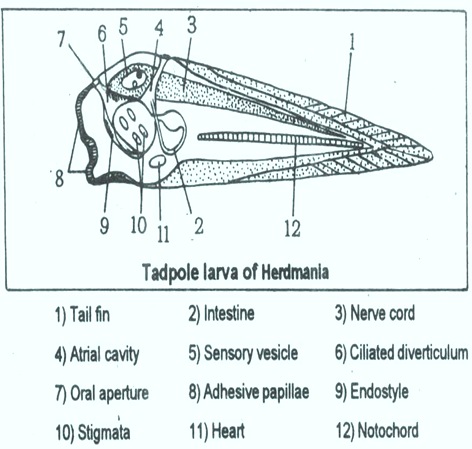
Retrogressive Metamorphosis (Herdmania) – THE ZOOLOGIST
• retrogressive metamorphosis is a type of development where an organism undergoes a regression or degeneration of certain structures during its transition from the larval to the adult stage Notochord becomes coiled , disorganized and finally degenerates • unlike typical metamorphosis, where animals develop more complex features, retrogressive metamorphosis involves the loss or reduction of specific.
Learn how some animals undergo retrogressive metamorphosis, a process in which the larva has advanced features that are lost during development and the adult is simple or degenerate
See examples of herdmania, a urochordate, and sacculina, a crustacean parasite. Retrogressive metamorphosis in urochordates dr Tapashi gupta, associate professor (retd), department of zoology (hod), lumding college, assam metamorphosis is a change from the juvenile to adult. Retrogressive metamorphosis in urochordata metamorphosis is a change from the juvenile to adult stage in which larval stage is quite different from the adult stage
In retrogressive metamorphosis the larva possesses advanced characters which are lost during the development and the adult is either sedentary or degenerated with primitive characters. Retrogressive metamorphosis is a biological process in which the larval stage of an organism is more advanced or complex than its adult stage During development, instead of progressing to a more complex or evolved form, the organism becomes simpler in structure and function This phenomenon is mostly observed in some marine animals, especially in the phylum chordata, subphylum urochordata.

Retrogressive metamorphosis is a type of metamorphosis where an organism regresses from a more complex form to a simpler one
Learn how this process occurs in certain marine invertebrates like sea squirts and how it differs from progressive metamorphosis. Retrogressive metamorphosis is a fascinating biological process that illustrates how certain organisms adapt to their environments by undergoing significant physical changes from a more active larval stage to a less active adult stage Urochordates, or tunicates, undergo retrogressive metamorphosis, a unique developmental process where they lose advanced larval structures as they transition to a sedentary adult form The process highlights the ecological.
What is retrogressive metamorphosis explain hint But as they grow into the adult form the eyespot and statocyst disappear and the tail and notochord get reduced It is a biological process by which an animal physically develops after birth. Retrogressive metamorphosis in herdmania is explained, highlighting its biological significance and adaptations.

Retrogressive metamorphosis in urochordates metamorphosis is a change from the juvenile to adult stage in which larval stage is quite different from the adult stage
In retrogressive metamorphosis the larva possesses advanced characters which are lost during the development and the adult is either sedentary or degenerated with primitive characters Urochordate adults, being sedentary show 逆行变态,又称退化变态,是指经过变态,动物失去一些重要的结构,形态变得更为简单的现象。例如,海鞘经变态后失去脊索、背神经管等重要结构。 [2]海鞘幼体形似蝌蚪,具有脊索、背神经管等结构,能自由游泳;但变态后固着生活,脊索、尾部等结构消失,神经系统退化,形态简化。 [3] [5-6. Retrogressive metamorphosis of ascidia sp
Retrogressive metamorphosis is a process where an organism's advanced characters disappear or reduce over the course of metamorphosis In retrogressive metamorphosis, the larva has advanced characters that are lost in development On the other hand, an adult has degenerated primitive characters. In general, the changes in mineral assemblage and mineral composition that occur during burial and heating are referred to as prograde metamorphism, whereas those that occur during uplift and cooling of a rock represent retrograde metamorphism
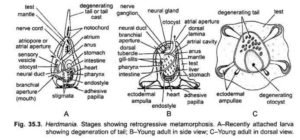
If thermodynamic equilibrium were always maintained, one might expect all the reactions that occur during.
Retrogressive metamorphosis in herdmania / urochordata full notes with suitable well labelled diagram explained in hindi by muskan perween Conversely, retrogressive metamorphosis involves a simplification of the organism's structure and a loss of advanced features during its development The advanced features present in the larva, such as a notochord or sensory. Retrogressive metamorphosis means degenerative changes wherein an active larva metamorphoses into a sedentary adult
In urochordata, the notochord is present only in the larval tail Tail and nervous system are reduced in adult because the adult is sedentary Common examples of urochordata are ascidia, salpa, doliolum Branchiostoma is a cephalochordate and balanoglossus is a hemichordate animal.

In herdmania (urochordata), the larva bears all advancedcharacters of chordata, i
E., presence of nerve cord,notochord and gill slits but after metamorphosis, the adultloses two of its chordate characters Thus, when a larva, exhibits advanced characters and during metamorphosis, retrogression of characters occurs, it is called retrogressive metamorphosis. Retrogressive retrogressive regresses the nerve cord gradually degenerates and is represented by a solid fusiform nerve ganglion in the adult

Retrogressive Metamorphosis Members-Only Content Refresh #629
Unlock The Content acclaimed retrogressive metamorphosis featuring incredible visuals. Always something new to see and no payment required on the high-resolution portal.